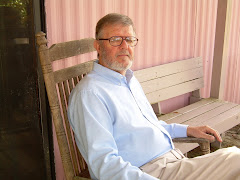
Old Man and Oysters
Commentary
By Richard E. Noble
An old man came walking into the restaurant. I had to look twice. This old man had grown old right before my eyes. A lot of this type thing has been going around in my world lately. Little girls who I just last saw scrambling around on a floor were now mothers themselves; teenagers I once knew somehow became school teachers and policemen; my one time paperboy is now a marine colonel and this old man was once a middle aged man I knew. He had a bulldozer and a dump truck when last I saw him. He cleared my lot as a matter of fact. But there he was sitting over in a corner of this restaurant with his ball cap on, reading the menu.
I gave him a look and a big smile when he came in but he didn’t recognize me - it had been a long time. I kept looking over at the old timer because I was still somewhat shocked. I could look at his face and remember just how he looked thirty years ago. He was basically the same today - his cheeks a little hollowed, his step more tentative, his gaze slightly glassy - but basically the same guy. He had that same big smile and that constantly bemused look. I had absolutely no doubt as to who he was. He took off his ball cap and placed it on the table - and I suddenly realized why he always were a baseball cap.
When the waitress came over he joked and laughed and put in his order. The special for the day in this little seafood community that has been my home for so many years was raw oysters on the half shell. Oysters have been caught right out in the bay in this area for decades - maybe even a century or so.
My wife and I were there for the oysters. We had already downed four dozen and we were now sitting back and sloshing down the last of our draft beer.
As I glanced over every now and then to check on my old neighbor, I noticed that he had gotten the raw oysters also - and he was having the same trouble that we were having. For some reason the oyster shucker had not cut the oysters away from the bottom shell. That’s not a major catastrophe but it is a little annoying to have to be scrapping the oysters out of the shell. And, although one might expect something like this in New York, one didn’t expect it in this little oystering community - where everybody knew better.
The old man struggled with the raw oysters attempting to scrape them away from the shell with his tiny fork. I could see that he was getting a little annoyed. That seems to happen more and more often to “older folks”. He began looking around for the waitress as he played around with his oysters. But she was busy. The place was packed and she was running all over the place. Finally, seeing that the oysters were being shucked no more than five steps away from his table - at the little raw bar - he rose from his seat picked up his straw basket lined with deli paper and headed for the raw bar.
I could see that he had developed a little case of the “shakes”. His straw basket was giggling in his hand like a Spanish maraca. He walked straight ahead concentrating on his goal and trying to catch the oyster shucker’s eye - not noticing that juice and water from in his basket was sloshing out of his straw tray all over the place - most heavily down the front of his nicely pressed tan trousers. He was spilling so much water over himself that I almost jumped up from my seat to run and help. My wife saw my agitation and she turned to take a look. She watched as he continued drenching himself all the way over to the raw bar. We both looked at each other and smiled.
As teenagers we probably would have witnessed this event and giggled and snickered but now, being just a few years behind my good neighbor, a sadness comes along with the slight amusement. It is really sad but, like a couple of insensitive kids, one has to laugh.
After he got his oysters cut away from the bottom shell, laughing and chatting all the while, he turned and headed back to his seat. I forced my wife to turn around and watch. It was the same on the way back to his table as it was on the way over - if not worse. The poor old boy was soaked.
When he sat down at his table he gathered up a fresh napkin and proceeded to spread it out onto his lap. Of course when he looked down at his lap he was completely shocked. How had his lap become soaked with water? He stared down at his pants and my wife and I could just hear the gears moving. “My god, what did I do ... piss my pants? I didn’t feel anything. There must be something wrong here.” Suddenly he looked up to the ceiling. That must be it. The damn ceiling leaks.
The ceiling was one of those warehouse type deals. All the rafters and pipes were left visible for the effect. When my old buddy saw the big round pipes running across the rafters, he had a revelation. One of them damn pipes up there must be leaking. When the waitress came to his table we watched the silent movie.
The old man says something. They both look down at his lap. The poor waitress is horror struck. She grabs up some napkins and starts scrubbing at the poor old man’s crotch. The old man’s face turns red - then the waitress’ face follows. The old man wards her off. He says something and then they both gaze up at the ceiling and stare at the giant cream colored pipes running across the rafters. The man continues to talk as the waitress shakes her head and shrugs her shoulders. My wife and I now had our napkins up over our faces trying to disguise our laughter.
But I must say we weren’t laughing at the poor old cougar; we were laughing with him or at ourselves - because without doubt in a very few years even with the grace of God there we are. And one day Sonny, if you’re lucky enough, even you.
Friday, November 03, 2006


Wednesday, November 01, 2006
Mister Duchnowski
MISTER DUCHNOWSKI’S BEAN SUPPERS
[Poetry]
By Richard E. Noble
The majority of my friends, and myself, spent the most of our young adult lives ... looking for love in all of the wrong places. I don’t think that we knew what we were doing. I don’t think that we realized that we were looking for love. But that is what we were doing. That is what we are all doing ... no matter how we express, or try to deny it. That is what we are doing.
Mister Duchnowski was the Dad of one of my bosom lifelong buddies. Every time that we saw him, he had the same advice for us. We had heard his advice so many times, that we knew his lecture by heart. We were always respectful to Mister D., but for the most part we thought of him as somewhat odd. I think that he knew what we thought, but he continued to give us the same speech nevertheless. There were times when we just laughed. We never took him seriously. We never really listened to his well intended lecture. And, we never followed his advice.
Today, Mister Duchnowski is no longer with us, but I can still see him smiling, his teeth back home on the bureau soaking in a glass, his stained, flat-topped golf cap stationed askew atop his wavy gray, and those polish eyes sparking sincerely and hopefully as he offered to us his best thought considerations with regards to our future love life. I still smile as I hear his voice, but now that I am the age that he was then, I have to think twice about what he was trying to say to us. I don’t think that we should have been laughing.
Here’s to you Mister D; and here’s Mister D to the all of you.
MR. DUCHNOWSKI’S BEAN SUPPERS
Listen to me ... listen to me!
You guys is entirely on the wrong track, ya see.
Skip the nightclubs, the booze, and the dim lights.
Take yourself down to a church bean supper one of these nights.
The prettiest girls that you have ever seen,
are right there in the line, spoonin’ out the beans.
I know, I know, you think that I’m old and outta my mind,
but believe me, at them ham and bean suppers are the prettiest
girls that you’ll ever find.
You wouldn’t believe the girl last night slicin’ up the German rye.
It gave ten years back to my life just to see that sweet look in her eye.
And next to her, with the Polish Kielbasey,
was an Italian girl by the name of Bonacarsee.
That dark hair and olive skin ... she could a been a movie star.
And there you guys are, down some dive or two bit bar.
What do you think you’re gonna meet down there?
You guys are missin’ it, I’m tellin’ ya ... But I don’t care.
My life’s over. It’s no matter to me.
But if it’s beautiful girls that you’re lookin’ for
them bean suppers is where you oughtta be.
That’s right! That’s right!
Oh yeah, you can laugh all you want,
but them Church bean suppers
are the places you guys oughtta haunt.
The prettiest girls that I’ve ever seen,
spoonin’ out pork ‘n beans like outta some dream.
You guys is just missin’ the boat.
Why it puts a lump right here in my throat
to think if I was you guy-es age,
I’ll tell ya, I wouldn’t be watchin’ some nude-y dancin’
in some cage.
I’d be down to one of them bean suppers, in a rush
tryin’ to steal a smile or pinch a blush
from one of them lovelies with sauce on her apron,
and bread flour smearin’ her chest.
Take it from me, it’s at them bean suppers
where the girls are the best.
You can leave it behind ... you can forget all the rest,
try one of them church bean suppers
and then you tell me if them girls ain’t the best.
That’s right! That’s right!
You try one of them bean suppers some night.
then you come back and tell me if old Mr. Duchnowski didn’t tell ya what’s right.
You just try one of them bean suppers some night
and see if what I tell you ain’t right.
[Poetry]
By Richard E. Noble
The majority of my friends, and myself, spent the most of our young adult lives ... looking for love in all of the wrong places. I don’t think that we knew what we were doing. I don’t think that we realized that we were looking for love. But that is what we were doing. That is what we are all doing ... no matter how we express, or try to deny it. That is what we are doing.
Mister Duchnowski was the Dad of one of my bosom lifelong buddies. Every time that we saw him, he had the same advice for us. We had heard his advice so many times, that we knew his lecture by heart. We were always respectful to Mister D., but for the most part we thought of him as somewhat odd. I think that he knew what we thought, but he continued to give us the same speech nevertheless. There were times when we just laughed. We never took him seriously. We never really listened to his well intended lecture. And, we never followed his advice.
Today, Mister Duchnowski is no longer with us, but I can still see him smiling, his teeth back home on the bureau soaking in a glass, his stained, flat-topped golf cap stationed askew atop his wavy gray, and those polish eyes sparking sincerely and hopefully as he offered to us his best thought considerations with regards to our future love life. I still smile as I hear his voice, but now that I am the age that he was then, I have to think twice about what he was trying to say to us. I don’t think that we should have been laughing.
Here’s to you Mister D; and here’s Mister D to the all of you.
MR. DUCHNOWSKI’S BEAN SUPPERS
Listen to me ... listen to me!
You guys is entirely on the wrong track, ya see.
Skip the nightclubs, the booze, and the dim lights.
Take yourself down to a church bean supper one of these nights.
The prettiest girls that you have ever seen,
are right there in the line, spoonin’ out the beans.
I know, I know, you think that I’m old and outta my mind,
but believe me, at them ham and bean suppers are the prettiest
girls that you’ll ever find.
You wouldn’t believe the girl last night slicin’ up the German rye.
It gave ten years back to my life just to see that sweet look in her eye.
And next to her, with the Polish Kielbasey,
was an Italian girl by the name of Bonacarsee.
That dark hair and olive skin ... she could a been a movie star.
And there you guys are, down some dive or two bit bar.
What do you think you’re gonna meet down there?
You guys are missin’ it, I’m tellin’ ya ... But I don’t care.
My life’s over. It’s no matter to me.
But if it’s beautiful girls that you’re lookin’ for
them bean suppers is where you oughtta be.
That’s right! That’s right!
Oh yeah, you can laugh all you want,
but them Church bean suppers
are the places you guys oughtta haunt.
The prettiest girls that I’ve ever seen,
spoonin’ out pork ‘n beans like outta some dream.
You guys is just missin’ the boat.
Why it puts a lump right here in my throat
to think if I was you guy-es age,
I’ll tell ya, I wouldn’t be watchin’ some nude-y dancin’
in some cage.
I’d be down to one of them bean suppers, in a rush
tryin’ to steal a smile or pinch a blush
from one of them lovelies with sauce on her apron,
and bread flour smearin’ her chest.
Take it from me, it’s at them bean suppers
where the girls are the best.
You can leave it behind ... you can forget all the rest,
try one of them church bean suppers
and then you tell me if them girls ain’t the best.
That’s right! That’s right!
You try one of them bean suppers some night.
then you come back and tell me if old Mr. Duchnowski didn’t tell ya what’s right.
You just try one of them bean suppers some night
and see if what I tell you ain’t right.
Tuesday, October 31, 2006
John Fitzgerald Kennedy
John Fitzgerald Kennedy
A Memoir
By Richard E. Noble
The phone rang in our little kitchen. We lived in a tiny apartment in Lawrence, Massachusetts. I spent the first twenty seven years of my life there. It was a mill town with layer after layer of blue collar tenement houses. My mother rarely answered the phone. It was usually never for her but someone calling for one of us kids. We all rushed to her side, ready to grab the phone when she said for whom the call was actually intended. But we were all stopped short, as she hung onto the receiver and began to speak;
“Yes, I know who you are, Bobby. Yes, I know that it is your brother, John, who is running for president.”
“What the ...? Who are you talking to Ma?”
“She’s talking to Bobby; you know Johnny’s brother.” We all laughed, as she went on as if she were talking to one of our school chums.
“Yes, I realize that tomorrow is Election Day ... Oh yes, I certainly intend to vote for your brother. I understand ... Yes, I certainly will ... I will ... I will! I’m going to be there the first thing in the morning. I wish you and your brother the best of luck ... Oh, don’t you worry Bobby; you have my vote.”
Bobby Kennedy had called our house the night before his brother was elected President of the United States.
J.F.K was one of us.
An Irish Catholic, Massachusetts boy, was going for the presidency. This was as close to home as it could get; our little State, our maligned faith, our dumpy neighborhood, our blue collar apartment in the inner-city slum, and our telephone. It was unbelievable. My mother was talking to Bobby about the election; my mother who was probably the least political person that I have ever known. But, that next morning she donned her winter coat and hat and went prancing off with her pocketbook hanging on her arm. I ran out on the porch. I didn’t know whether to cheer, applaud or what. She looked like a miniature Eleanor Roosevelt parading down Chelmsford Street to the corner where they were all lined up at the voting station.
She had received her orders and was marching to her destiny which was to personally elect John F. Kennedy president. And she did it. It was the closest election of the twentieth century thus far.
Johnny won by slightly more than 100,000 votes. He was the youngest man yet to be elected president - the first Catholic president. And though I was just slightly too young to vote for him myself, he was my president also.
He was the president of all the young people. He was as sharp as a tack. He knew his ABC’s. He had all the answers. The press was no match for him. He was smarter than they were. He smiled, had a huge grin and told jokes about his dad and his wife and brothers and sisters. He was a big tease, just like your older brother, or your own dad. He was a hero during the War. I went to see the movie PT-109 at the local movie theater. I bought his book, “Profiles in Courage”. I still have a copy. It was a real book.
“Profiles in Courage” was no political biography book about how I was born in a log cabin. It was not about himself. It was about men in history who had acted courageously, even if it meant their political careers. John F. Kennedy was more than another pretty face.
“Profiles in Courage” was a book about ideals, about principles. It became a TV series. I can remember lying on the parlor floor with my head up against a hassock watching this week’s excerpt with the whole family. At the end of each episode there was somebody crediting John F. Kennedy, and some bit of his personal idealistic inspiration. If I’m not mistaken, he introduced the show, or signed it off - or something.
John F. Kennedy, the War Hero, who had saved his buddies; the intellectual and Harvard graduate, the Journalist, the TV show writer, the first Catholic president, the youngest elected president, the family man with a picture book wife and regular kids hiding under his desk at the White House, the little rich boy who had a feeling for the working stiff. John F. Kennedy, the man who was going to bring peace to the world at last.
By the time I got to college everybody was enrolling in the Kennedy Army for Peace. They called it the Peace Corps. They say that it was really Hubert Humphrey’s idea, but it was Kennedy who pushed and promoted it. Every student that I talked to was joining the Peace Corps. They were all making me feel guilty and hypocritical. Finally we had a president who stopped the tradition of talking about peace while making war; a president who was going to turn it all upside-down. He was going to actively make peace and try to keep the war mongers talking. The whole world got his message and everybody was cheering - except the Russians and Fidel Castro.
Then suddenly it was eyeball to eyeball. The end of the world was on the horizon. But this was O.K. It was all for one and one for all. It was no pull-a-name-out-of-a-hat deal. If we were going to die, we were all going to die at once - BOOM! And who gives a damn. It was a relief. No more hiding under the desks, or looking for a designated bomb shelter, or storing up supplies in the cellar, or contemplating a slow death by some kind of horrid radiation poisoning. If the world really couldn’t be saved, then let’s end it, once and for all. We would prove T. S. Eliot wrong. The world wouldn’t end with a whimper but a BANG! We finally got this chicken-chicken stuff over with. Khrushchev pushed, and Kennedy pushed back - the Cuban Missile Crisis.
When it was over Khrushchev had blinked. Russian ships were on the TV loading up their ships and heading home with their bombs and missiles. Kennedy had stood up to the bullies and they were tucking their missiles between their legs and heading back to their own school yard. If there was anybody who doubted Kennedy’s policy at that time, I don’t remember that they had time to voice their opinion. The missiles were there; we were on the brink of destruction, and then it was over. It was scary, but we all went through it together - holding our breath.
I have heard many say that Kennedy did it all wrong, we should have invaded Cuba and put Castro to rest. But information from the Russian Archives has since proved that Mister Kennedy and his brother were more than correct. The Russians had tactical nuclear weapons on Cuban soil and submarines off the East Coast of the U.S. with orders to fire if the U.S. had attacked. And due to problems in the Russian communications system the order to retaliate had been given by Khrushchev and couldn’t have been changed in time to stay a holocaust. The East Coast of the United States from Washington D.C. to Tampa Florida would have been gone - along with a heck of a lot more. The incident scared the heck out of both Kennedy and Khrushchev and they consequently had the infamous hot lines installed.
But, Kennedy was a president to whom the presidency wasn’t the culmination of his life and career. He was too young. He was just starting. He was going to really be something special. He would write history or be a movie star, or teach at Harvard. The presidency was just a stop on his way to bigger and better things and everybody knew it.
I was in my college History class at Northern Essex Community College. It was a renovated Haverhill grammar school. It cost me one hundred and fifty bucks a semester. I had a 1946 Desoto, fluid drive that had to be jump-started every day. I parked it on a hill outside the school and everybody watched and laughed each day as, my buddies and I, all pushed it down the hill to get it rolling and then jumped in when I popped it to a start. It was bright yellow, and we called it the Banana Boat. A phrase made popular a few years earlier by Harry Belafonte. This new junior college and the state-wide junior college program was one of Kennedy’s new ideas. A kid of my Class, and my finances, and my academic background had very little hope of getting a college education.
A young office worker stepped into our classroom, unannounced. He walked up to the teacher’s desk and handed him a piece of paper. The teacher read the note, silently. Then he looked up at the class, and spoke:
“The president of the United States has just been shot in Dallas, Texas. The class is dismissed”.
A boy in the back of the class jumped up and started mumbling something about his tuition and that he was paying that teacher’s salary and he wanted the class to continue. The teacher repeated; “Class dismissed.” Then he turned and started gathering things up from his desk. The mouthy boy kept grumbling. He grumbled all the way down the corridor and out into the school yard. In a matter of seconds he had a crowd around him and was in a fist fight.
In the cellar of the grammar school we had a small make-shift cafeteria. It was just vending machines, a small bookstore and a couple of TV’s. We were glued to the TV’s. The girls were all in tears and sobbing. Their eyes were all wet and raw and their noses red from the constant use of tissues and table napkins.
My father had died suddenly and without warning a few years earlier. This assassination was the exact same experience all over again. Once again I was waiting for the doctors to announce that everything would be all right and that he would live, but just as with my dad, this wasn’t to be the case.
I was stunned in the same way as I had been with my dad when they announced that the president was dead. But, I was steeled to the concept of death now. I had no tears. I had no why’s. Death has no explanation. The Nation would go on as it did after Lincoln, after Garrison, after McKinley. It would go on as it has after all the different presidents who had been killed or who had died in office. We had a system, and the system would go on; just as my life had gone on after my father’s death. Just as everyone’s life continues and goes on after the death of any loved one. You have no choice.
But a lot of dreams would now die and be forgotten.
At my father’s funeral, they kept saying; - He was so young - and I thought, silently; does death have an age limit? Is anyone too young or not old enough to die? Hardly. Here was the hope of the world and he had just had his head blown off in Dallas, Texas.
Watching the funeral on the TV was tragic. Little John-John being prodded forward by his mother and saluting the coffin; the horse with no rider; the hauntingly slow, and penetrating cadence of the drums - a whole nation in mourning. The memories of those days never seem to die.
Maybe they’re not supposed to.
John F. Kennedy holds the unique distinction of being the only president to be assassinated more than once.
He was first assassinated on November 22, 1963 when he had his head blown off in Dallas, Texas. Since that initial assassination, John F. Kennedy has been slowly assassinated, day by day, by the written word in newspapers, periodicals, books, and documentary films in what seems to me to be an attempt to prove to us, the American people, that John F. Kennedy was such a terrible man that he really deserved to be killed in the first place.
I view this with the same attitude that I have learned to view rape. It doesn’t matter if she looks like a whore, acts like a whore, or even if she is a whore, no man has the right to take her without her voluntary consent.
Somebody murdered a president of this United States, and not only got away with it, but has since convinced us Americans that it doesn’t even matter.
John F. Kennedy, no matter what his character faults, did not deserve to be murdered. He may have been an S.O.B., but, as someone has said before me, he was our S.O.B. And if our government knows what happened, it is time that we were informed and the information, at least, made available to our historians. I feel that I have a right to know the truth before I die. The time is here.
The suspects in the murder of J.F.K. include nearly everyone. The only prominent person or group not yet accused of the crime, I think, is the Pope.
Things we know: The Warren Commission Report was a blatant cover-up. The autopsy was fudged. There was more than one gunman. It now seems that there were so many bullets fired, one wonders how innocent by-standers weren’t hit - Oswald’s nest, the grassy knoll on the right; the grassy knoll on the left; somewhere from the front; somewhere from the back; from the sewers. Assassins seem to have been all over the place. Shoplifters got better police protection than Oswald received walking up that ramp to his death at the hands of Jack Ruby. Who are they kidding!
To me, one thing does seem to be certain here. A whole bunch of prominent people have been lying on this matter. Why?
Americans have the right to know their own history. Open up all this secret stuff and, at least, let the academics in. Most everybody involved is probably dead by now. It won’t change anything, but it should be important to a people who keep making claim to be living in - the land of the free and the home of the brave.
A Memoir
By Richard E. Noble
The phone rang in our little kitchen. We lived in a tiny apartment in Lawrence, Massachusetts. I spent the first twenty seven years of my life there. It was a mill town with layer after layer of blue collar tenement houses. My mother rarely answered the phone. It was usually never for her but someone calling for one of us kids. We all rushed to her side, ready to grab the phone when she said for whom the call was actually intended. But we were all stopped short, as she hung onto the receiver and began to speak;
“Yes, I know who you are, Bobby. Yes, I know that it is your brother, John, who is running for president.”
“What the ...? Who are you talking to Ma?”
“She’s talking to Bobby; you know Johnny’s brother.” We all laughed, as she went on as if she were talking to one of our school chums.
“Yes, I realize that tomorrow is Election Day ... Oh yes, I certainly intend to vote for your brother. I understand ... Yes, I certainly will ... I will ... I will! I’m going to be there the first thing in the morning. I wish you and your brother the best of luck ... Oh, don’t you worry Bobby; you have my vote.”
Bobby Kennedy had called our house the night before his brother was elected President of the United States.
J.F.K was one of us.
An Irish Catholic, Massachusetts boy, was going for the presidency. This was as close to home as it could get; our little State, our maligned faith, our dumpy neighborhood, our blue collar apartment in the inner-city slum, and our telephone. It was unbelievable. My mother was talking to Bobby about the election; my mother who was probably the least political person that I have ever known. But, that next morning she donned her winter coat and hat and went prancing off with her pocketbook hanging on her arm. I ran out on the porch. I didn’t know whether to cheer, applaud or what. She looked like a miniature Eleanor Roosevelt parading down Chelmsford Street to the corner where they were all lined up at the voting station.
She had received her orders and was marching to her destiny which was to personally elect John F. Kennedy president. And she did it. It was the closest election of the twentieth century thus far.
Johnny won by slightly more than 100,000 votes. He was the youngest man yet to be elected president - the first Catholic president. And though I was just slightly too young to vote for him myself, he was my president also.
He was the president of all the young people. He was as sharp as a tack. He knew his ABC’s. He had all the answers. The press was no match for him. He was smarter than they were. He smiled, had a huge grin and told jokes about his dad and his wife and brothers and sisters. He was a big tease, just like your older brother, or your own dad. He was a hero during the War. I went to see the movie PT-109 at the local movie theater. I bought his book, “Profiles in Courage”. I still have a copy. It was a real book.
“Profiles in Courage” was no political biography book about how I was born in a log cabin. It was not about himself. It was about men in history who had acted courageously, even if it meant their political careers. John F. Kennedy was more than another pretty face.
“Profiles in Courage” was a book about ideals, about principles. It became a TV series. I can remember lying on the parlor floor with my head up against a hassock watching this week’s excerpt with the whole family. At the end of each episode there was somebody crediting John F. Kennedy, and some bit of his personal idealistic inspiration. If I’m not mistaken, he introduced the show, or signed it off - or something.
John F. Kennedy, the War Hero, who had saved his buddies; the intellectual and Harvard graduate, the Journalist, the TV show writer, the first Catholic president, the youngest elected president, the family man with a picture book wife and regular kids hiding under his desk at the White House, the little rich boy who had a feeling for the working stiff. John F. Kennedy, the man who was going to bring peace to the world at last.
By the time I got to college everybody was enrolling in the Kennedy Army for Peace. They called it the Peace Corps. They say that it was really Hubert Humphrey’s idea, but it was Kennedy who pushed and promoted it. Every student that I talked to was joining the Peace Corps. They were all making me feel guilty and hypocritical. Finally we had a president who stopped the tradition of talking about peace while making war; a president who was going to turn it all upside-down. He was going to actively make peace and try to keep the war mongers talking. The whole world got his message and everybody was cheering - except the Russians and Fidel Castro.
Then suddenly it was eyeball to eyeball. The end of the world was on the horizon. But this was O.K. It was all for one and one for all. It was no pull-a-name-out-of-a-hat deal. If we were going to die, we were all going to die at once - BOOM! And who gives a damn. It was a relief. No more hiding under the desks, or looking for a designated bomb shelter, or storing up supplies in the cellar, or contemplating a slow death by some kind of horrid radiation poisoning. If the world really couldn’t be saved, then let’s end it, once and for all. We would prove T. S. Eliot wrong. The world wouldn’t end with a whimper but a BANG! We finally got this chicken-chicken stuff over with. Khrushchev pushed, and Kennedy pushed back - the Cuban Missile Crisis.
When it was over Khrushchev had blinked. Russian ships were on the TV loading up their ships and heading home with their bombs and missiles. Kennedy had stood up to the bullies and they were tucking their missiles between their legs and heading back to their own school yard. If there was anybody who doubted Kennedy’s policy at that time, I don’t remember that they had time to voice their opinion. The missiles were there; we were on the brink of destruction, and then it was over. It was scary, but we all went through it together - holding our breath.
I have heard many say that Kennedy did it all wrong, we should have invaded Cuba and put Castro to rest. But information from the Russian Archives has since proved that Mister Kennedy and his brother were more than correct. The Russians had tactical nuclear weapons on Cuban soil and submarines off the East Coast of the U.S. with orders to fire if the U.S. had attacked. And due to problems in the Russian communications system the order to retaliate had been given by Khrushchev and couldn’t have been changed in time to stay a holocaust. The East Coast of the United States from Washington D.C. to Tampa Florida would have been gone - along with a heck of a lot more. The incident scared the heck out of both Kennedy and Khrushchev and they consequently had the infamous hot lines installed.
But, Kennedy was a president to whom the presidency wasn’t the culmination of his life and career. He was too young. He was just starting. He was going to really be something special. He would write history or be a movie star, or teach at Harvard. The presidency was just a stop on his way to bigger and better things and everybody knew it.
I was in my college History class at Northern Essex Community College. It was a renovated Haverhill grammar school. It cost me one hundred and fifty bucks a semester. I had a 1946 Desoto, fluid drive that had to be jump-started every day. I parked it on a hill outside the school and everybody watched and laughed each day as, my buddies and I, all pushed it down the hill to get it rolling and then jumped in when I popped it to a start. It was bright yellow, and we called it the Banana Boat. A phrase made popular a few years earlier by Harry Belafonte. This new junior college and the state-wide junior college program was one of Kennedy’s new ideas. A kid of my Class, and my finances, and my academic background had very little hope of getting a college education.
A young office worker stepped into our classroom, unannounced. He walked up to the teacher’s desk and handed him a piece of paper. The teacher read the note, silently. Then he looked up at the class, and spoke:
“The president of the United States has just been shot in Dallas, Texas. The class is dismissed”.
A boy in the back of the class jumped up and started mumbling something about his tuition and that he was paying that teacher’s salary and he wanted the class to continue. The teacher repeated; “Class dismissed.” Then he turned and started gathering things up from his desk. The mouthy boy kept grumbling. He grumbled all the way down the corridor and out into the school yard. In a matter of seconds he had a crowd around him and was in a fist fight.
In the cellar of the grammar school we had a small make-shift cafeteria. It was just vending machines, a small bookstore and a couple of TV’s. We were glued to the TV’s. The girls were all in tears and sobbing. Their eyes were all wet and raw and their noses red from the constant use of tissues and table napkins.
My father had died suddenly and without warning a few years earlier. This assassination was the exact same experience all over again. Once again I was waiting for the doctors to announce that everything would be all right and that he would live, but just as with my dad, this wasn’t to be the case.
I was stunned in the same way as I had been with my dad when they announced that the president was dead. But, I was steeled to the concept of death now. I had no tears. I had no why’s. Death has no explanation. The Nation would go on as it did after Lincoln, after Garrison, after McKinley. It would go on as it has after all the different presidents who had been killed or who had died in office. We had a system, and the system would go on; just as my life had gone on after my father’s death. Just as everyone’s life continues and goes on after the death of any loved one. You have no choice.
But a lot of dreams would now die and be forgotten.
At my father’s funeral, they kept saying; - He was so young - and I thought, silently; does death have an age limit? Is anyone too young or not old enough to die? Hardly. Here was the hope of the world and he had just had his head blown off in Dallas, Texas.
Watching the funeral on the TV was tragic. Little John-John being prodded forward by his mother and saluting the coffin; the horse with no rider; the hauntingly slow, and penetrating cadence of the drums - a whole nation in mourning. The memories of those days never seem to die.
Maybe they’re not supposed to.
John F. Kennedy holds the unique distinction of being the only president to be assassinated more than once.
He was first assassinated on November 22, 1963 when he had his head blown off in Dallas, Texas. Since that initial assassination, John F. Kennedy has been slowly assassinated, day by day, by the written word in newspapers, periodicals, books, and documentary films in what seems to me to be an attempt to prove to us, the American people, that John F. Kennedy was such a terrible man that he really deserved to be killed in the first place.
I view this with the same attitude that I have learned to view rape. It doesn’t matter if she looks like a whore, acts like a whore, or even if she is a whore, no man has the right to take her without her voluntary consent.
Somebody murdered a president of this United States, and not only got away with it, but has since convinced us Americans that it doesn’t even matter.
John F. Kennedy, no matter what his character faults, did not deserve to be murdered. He may have been an S.O.B., but, as someone has said before me, he was our S.O.B. And if our government knows what happened, it is time that we were informed and the information, at least, made available to our historians. I feel that I have a right to know the truth before I die. The time is here.
The suspects in the murder of J.F.K. include nearly everyone. The only prominent person or group not yet accused of the crime, I think, is the Pope.
Things we know: The Warren Commission Report was a blatant cover-up. The autopsy was fudged. There was more than one gunman. It now seems that there were so many bullets fired, one wonders how innocent by-standers weren’t hit - Oswald’s nest, the grassy knoll on the right; the grassy knoll on the left; somewhere from the front; somewhere from the back; from the sewers. Assassins seem to have been all over the place. Shoplifters got better police protection than Oswald received walking up that ramp to his death at the hands of Jack Ruby. Who are they kidding!
To me, one thing does seem to be certain here. A whole bunch of prominent people have been lying on this matter. Why?
Americans have the right to know their own history. Open up all this secret stuff and, at least, let the academics in. Most everybody involved is probably dead by now. It won’t change anything, but it should be important to a people who keep making claim to be living in - the land of the free and the home of the brave.
Subscribe to:
Posts (Atom)